The forex bot industry is full of hype, recycled indicators, and straight-up scams.
2025 is the year where real AI trading systems — not the cheap rule-based EAs disguised as “AI” — finally broke into the mainstream. This guide filters the noise and highlights what actually works, what’s improving, and what’s still marketing bullshit.
If you want to pick a bot that performs consistently, adapts to market volatility, and avoids blowing your account during news spikes, then this breakdown is for you.
Why AI Bots Are Taking Over in 2025
Traditional forex robots depend on fixed rules: MA crossovers, RSI triggers, volatility bands, or grid/martingale logic.
They perform well until market regimes change — and they always change.
AI bots flip the script by learning from market data instead of following rigid parameters.
In 2025, the most successful retail AI bots use:
Deep Reinforcement Learning (DRL) LSTM/Transformer-based price prediction models Sentiment analysis from financial news and central bank narratives Multi-agent systems for position sizing and risk management Real-time anomaly detection to stop the bot before it nukes the account
If a bot doesn’t use at least one of these techniques, it’s outdated — or lying.
Top AI Forex Bots to Use in 2025
Below is a breakdown of the strongest AI-driven options this year.
You’ll see the pros, weaknesses, and the real use cases — not the sugarcoated marketing angle.
1. MultiScalper Pro AI (X-STOX)
Best for: Intraday scalping + adaptive learning
Platform: MT4/MT5
Strategy Type: Deep learning + micro-pattern recognition
Your product category sits here — and you need to position it as a high-tech, adaptive system, not another “plug-and-pray” EA.
Why it works in 2025:
Learns short-term market microstructures (tick patterns, volatility bursts) Quickly adapts during regime shifts Uses DRL for entry/exit optimization Risk engine adjusts automatically based on drawdown and volatility
Ideal for: Traders who want a fast-moving bot but don’t want to manually tweak settings every week.
Weakness:
Needs a fast VPS to get maximum performance Performs poorly in ultra-low volatility markets (nobody wins there anyway)
2. SentimentFlow AI
Best for: News-heavy FX pairs
Strategy: NLP + sentiment scoring
This bot uses NLP and machine-learning models to parse:
central bank speeches economic releases financial news social sentiment
It doesn’t try to “predict” news — it reacts faster than humans and aligns trades with directional bias.
Strengths:
Works extremely well on GBPUSD, EURUSD, XAUUSD Adjustable aggression based on sentiment confidence
Weakness:
Can be highly inactive during quiet news cycles Requires paid API feeds for best performance
3. Chronos DRL Bot
Best for: Trend-riding with AI risk management
Strategy: Multi-agent deep reinforcement learning
Instead of one model handling everything, Chronos uses multiple DRL agents:
Agent 1: Entry Agent 2: Trend confirmation Agent 3: Position sizing Agent 4: Stop-loss/Take-profit tuning
This division of labor massively reduces catastrophic losses.
Strengths:
Learns from thousands of market hours Adaptive risk engine Works well on swing timeframes (H1, H4)
Weakness:
Requires long training data sets Not suited for pure scalping
4. QuantEdge Transformer Bot
Best for: Medium-term prediction models
Strategy: Transformer-based price forecasting
This bot uses the same model architecture used in language models — but trained on OHLCV sequences.
Why it’s good:
Predicts short-term price direction with higher accuracy than traditional LSTM Great for day traders who want fewer but smarter entries Handles noisy FX data better
Weakness:
Execution frequency is low Needs robust data feeding to work as intended
5. GridShield AI (Safe Grid Bot)
Best for: Traders who like grid bots but don’t want to blow accounts
Strategy: AI-driven risk suppression
Let’s be brutally honest:
Grid bots blow accounts because they never stop adding positions.
GridShield AI fixes the suicidal nature of grid systems by adding:
volatility detection dynamic grid spacing news filters max-exposure AI governors
Strengths:
Makes grid trading far less dangerous Better for sideways markets
Weakness:
Still risky if misconfigured Not suitable for strong-trending markets
How to Choose the Right AI Bot (Simple Framework)
Most traders pick bots emotionally.
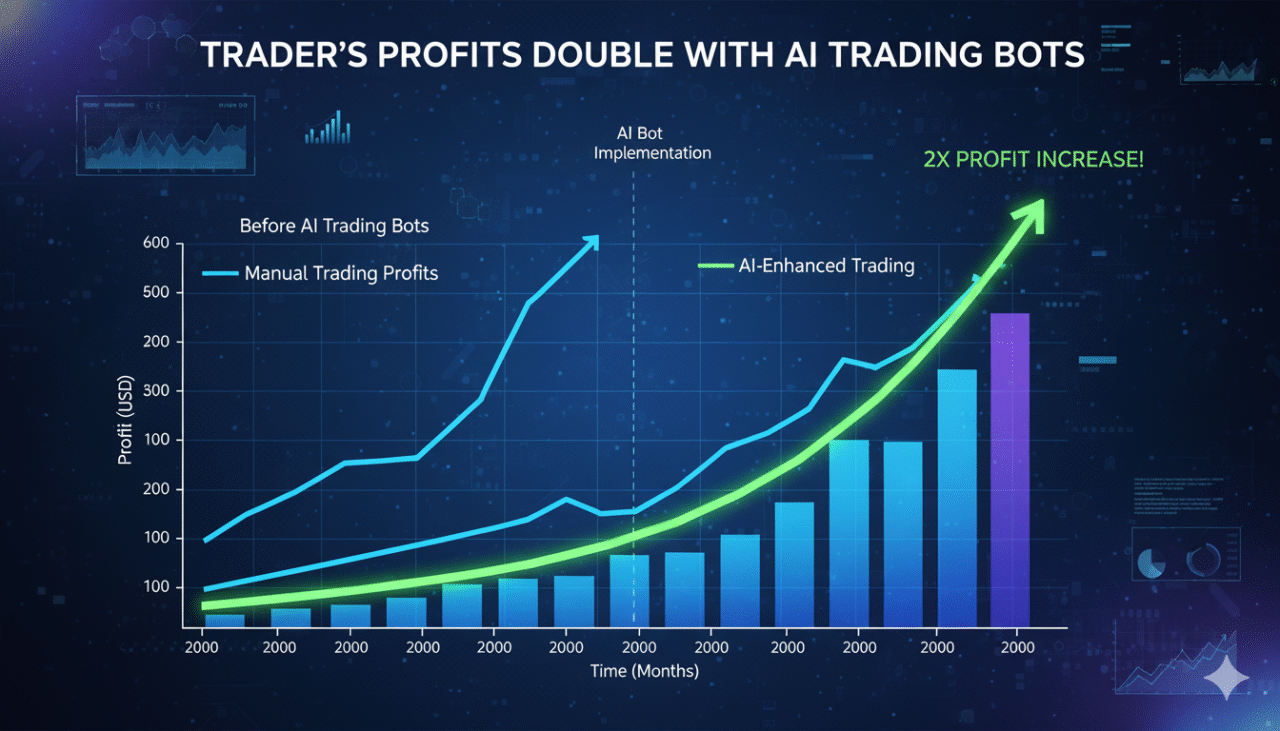
Use this cold, logical checklist instead:
✅ 1. What market condition does the bot need?
Scalper bots need volatility.
Trend bots need direction.
Sentiment bots need news.
✅ 2. Does it adapt to regime shifts?
If not, it will die in a month.
✅ 3. Does it avoid suicide logic?
Any bot that
averages down grids too aggressively martingales will eventually wipe the account.
✅ 4. Is there actual AI involved?
Most “AI bots” today are marketing labels for simple indicators.
Look for:
DRL LSTM/Transformers Sentiment/NLP Multi-agent systems Anomaly detection
If none of these are used — walk away.
✅ 5. Does it have fail-safes?
max drawdown limit exposure caps auto-shutdown triggers slippage protection
No guardrails = disaster waiting to happen.
SEO-Optimized Keywords to Include on Your Website (Integrate Naturally)
Use these throughout your site/blog:
best AI forex bot 2025 AI forex robot for MT4/MT5 deep learning forex trading bot reinforcement learning trading bot forex automated trading AI best forex trading bots sentiment analysis forex bot machine learning forex bot forex AI scalping bot
These keywords bring targeted traffic and improve ranking for your core product pages.
Conclusion: AI Bots Are Useful — But Only If Built Correctly
2025 is separating real AI from fake AI in forex trading.
The bots listed above represent the systems actually using modern machine-learning techniques — not the recycled garbage sold to beginners.